

WFA Engineering Hands Over A Turnkey Cattle Slaughterhouse Project Built To Take 200 Cattle Per Shift in USA
Opening Remark
"We do not sell drawings and wish the buyer luck. A Turnkey Cattle Slaughterhouse Project means the switch turns on because our people turned it."
Scene One: The Drawing Board
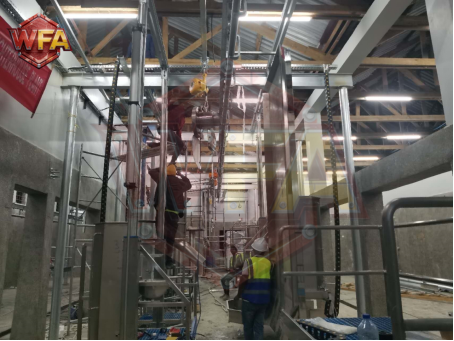
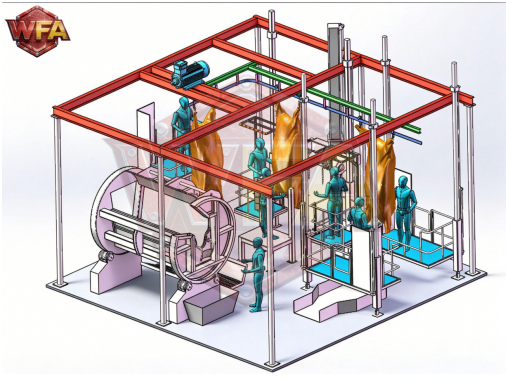
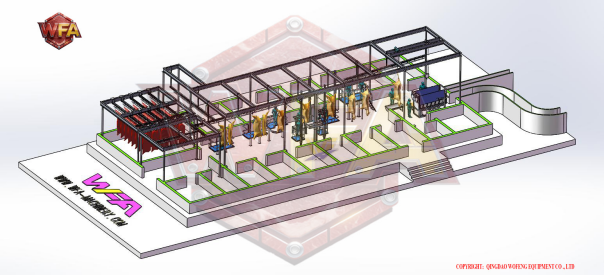
Before a single bolt was ordered, designers walked the herd through the screen. Cattle flow, knife paths and wash down cycles moved again and again until no corridor crossed itself and no carcass met a dirty lane. The duty of 200 cattle per shift was never a slide figure: it entered the earliest sketch as a hard limit, so stall spacing, rail gradients and chill capacity were sized backward from that number. By the time the first container reached the dock, dimensions, tie in points and load cases had all been locked, which is why nobody on site had to improvise. Scope never came up for debate on arrival, because scope had been settled months earlier in a Turnkey Cattle Slaughterhouse Project review meeting.
Scene Two: The Trial Kill
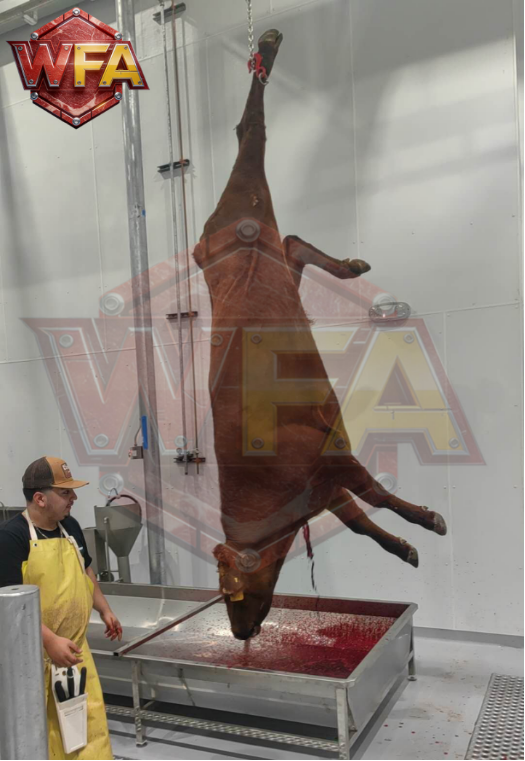
Then live cattle came through. Sensors were tuned with animals on the rail, conveyor speeds trimmed a notch at a time, knife stations shifted by hand until carcass quality stopped wobbling and no post became a bottleneck. Stunning settings, bleed timing, rail synchronisation and the chill curve went into the log, then got rechecked against the daily load the buyer intends to run. The client stood at the line the whole time, hearing the rail clatter at the agreed tempo, not reading about it in a report weeks later. Simulations ran first for several weeks, yet this Turnkey Cattle Slaughterhouse Project earned its signature on the day real animals met the floor.
Scene Three: After Handover
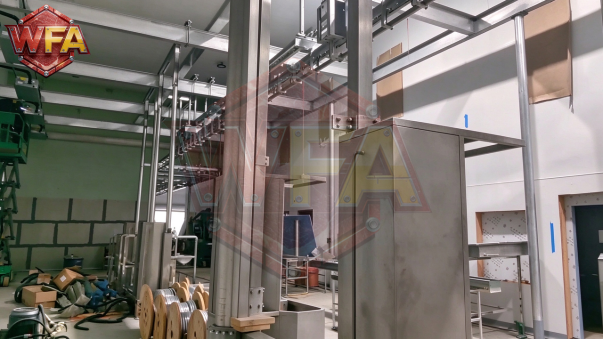
Training happened where the line stands, not in a classroom overseas. WFA technicians stayed on site through commissioning and the opening production weeks, standing at each post to walk operators through knife handling, hygiene rules, emergency stops and sanitation order. Checklists went out printed in the local language, and every maintenance hand learned lubrication points, belt tension checks and fault code reading with a technician beside him. Nobody on the client side had to travel abroad to be taught, because the trainers came to the plant. Remote diagnostics and spare parts support stay open after the crew leaves, so daily upkeep of this Turnkey Cattle Slaughterhouse Project rests on trained hands instead of guesswork. Buyers weighing a second line ask how fast this Turnkey Cattle Slaughterhouse Project can be copied, which is the question a serious partner wants to hear.
Beyond The Delivery List
What Turnkey Really Covers
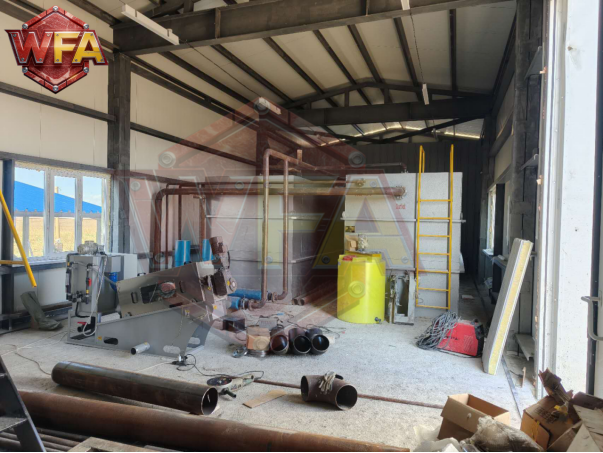
A slaughter line on its own is not yet a plant. The package that left the yard carried the waste water treatment set, the boiler house, the waste handling line and the cold store, each sized against the same 200 cattle per shift duty as the rail. Water leaves the site inside the discharge rule the buyer’s region enforces, steam reaches the wash and sanitation points, waste moves out on a schedule the buyer controls, and carcasses reach the chill room with no break in the chain. That is what a Turnkey Cattle Slaughterhouse Project buys: one supplier, one start up, and a plant that runs from live animal to chilled carcass without a missing vendor in the middle.
Shipping Sequence
Containers were loaded by module order, so the crate needed on the opening day sat nearest the door and nothing waited on a ship. Skids, boxes and lifting lugs carried matching numbers, and unpacking ran like a checklist, with no argument on the yard.
Electrical Fit For Local Supply
Control panels were built to the voltage, frequency and plug standard the buyer runs at home, with manuals issued in both languages before commissioning rather than after. Start up needed no adapter boxes and no improvised wiring on the floor.
Documents That Clear Audits
Material certificates, hygienic design statements, as built drawings and spare parts lists travelled with the shipment, letting the client build the file while steel was still on the water. Auditors asking for traceability get answers in minutes, not weeks.
Closing
Fresh American enquiries now name this Turnkey Cattle Slaughterhouse Project as their benchmark file, and WFA Engineering reads that as proof that overseas buyers pay for engineering discipline rather than slogans.