

WFA Engineering Hands Over A Cattle Slaughterhouse Project Built To Take 300 Cattle Per Shift In South Africa
“We never hand a buyer a plant that goes dark when the grid does. The compressors keep turning at two in the morning, whether the utility line is live or not.”
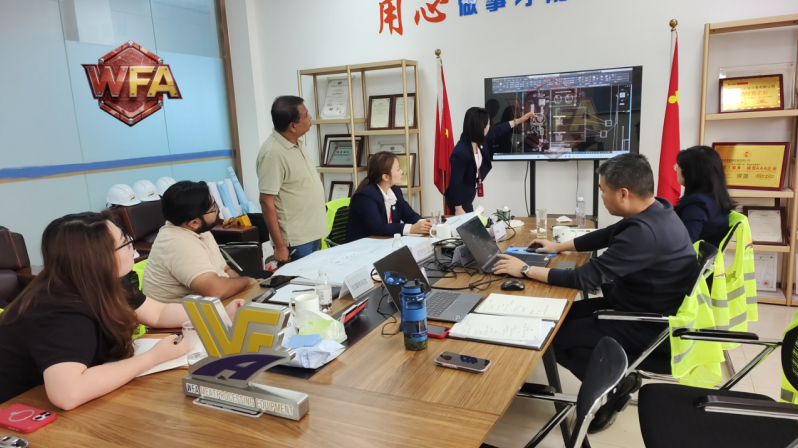
Before a single bolt entered a quotation, the design team anchored this Slaughterhouse Project to the one figure that could break the project: how much power 300 cattle per shift would draw once stunners, rails, pumps, compressors and the chill loop all ran at once. That number decided the shape of everything that followed for the Slaughterhouse Project, from the count of generator sets to the rating of the changeover gear, from the thickness of cold room panels to the route of the main cable. Supply in the buyer’s district is not steady, and no honest engineering office pretends otherwise. So the plant was drawn as a small island able to run alone, and the 300 cattle duty entered that sketch as a hard limit rather than a wish, setting the non-negotiable performance baseline for the Slaughterhouse Project.
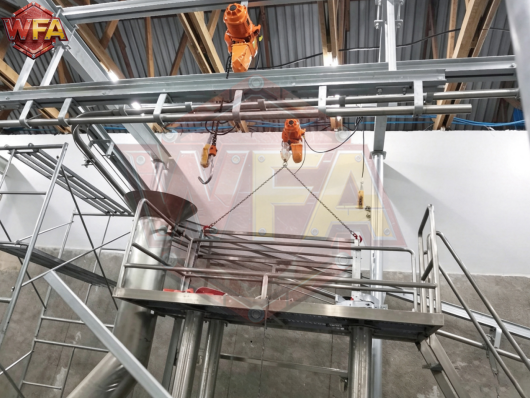
Then came the week when the incoming feeders opened twice inside one shift, with cattle already on the rail. The changeover gear did what the drawings promised: the line slowed instead of stopping, the compressors picked up on the standby set, and the chill rooms never left their band. Engineers logged the interval of each switch, the drop in rail speed and the temperature curve in every chamber, then tightened the sequence so the next event would cost less time than the one before. The client watched from the loading bay as the lights stayed on, hearing the plant answer the grid in its own rhythm. A trial of that kind signs a Turnkey Cattle Slaughterhouse Project far more honestly than a folder of calculations.
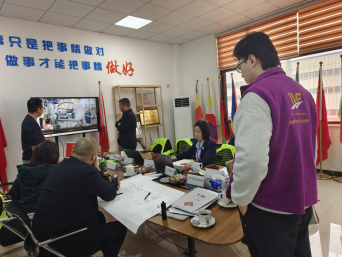
Training happened where the line stands, not in a classroom abroad. WFA technicians stayed through commissioning and the opening production weeks, walking each post through knife handling, hygiene order, emergency stops and the changeover drill that keeps a shift alive when supply fails. Checklists were printed in the language the crew speaks at home, and every maintenance hand learned lubrication points, belt tension checks, fault codes and the sound of a generator running lean, with a technician standing beside him. Nobody on the client side had to travel overseas to be taught, because the teachers came to the plant. Remote diagnostics and a local spare parts channel stay open once the crew leaves, so daily upkeep of this Turnkey Cattle Slaughterhouse Project rests on trained hands rather than guesswork.
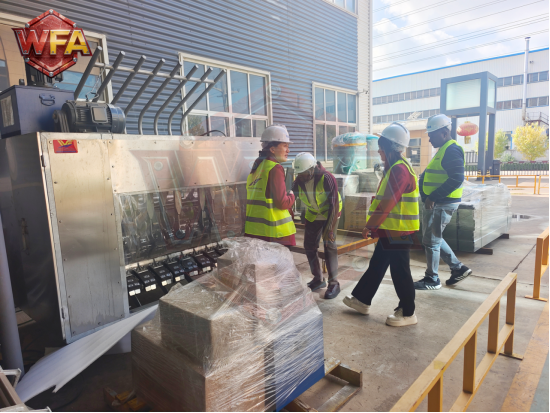
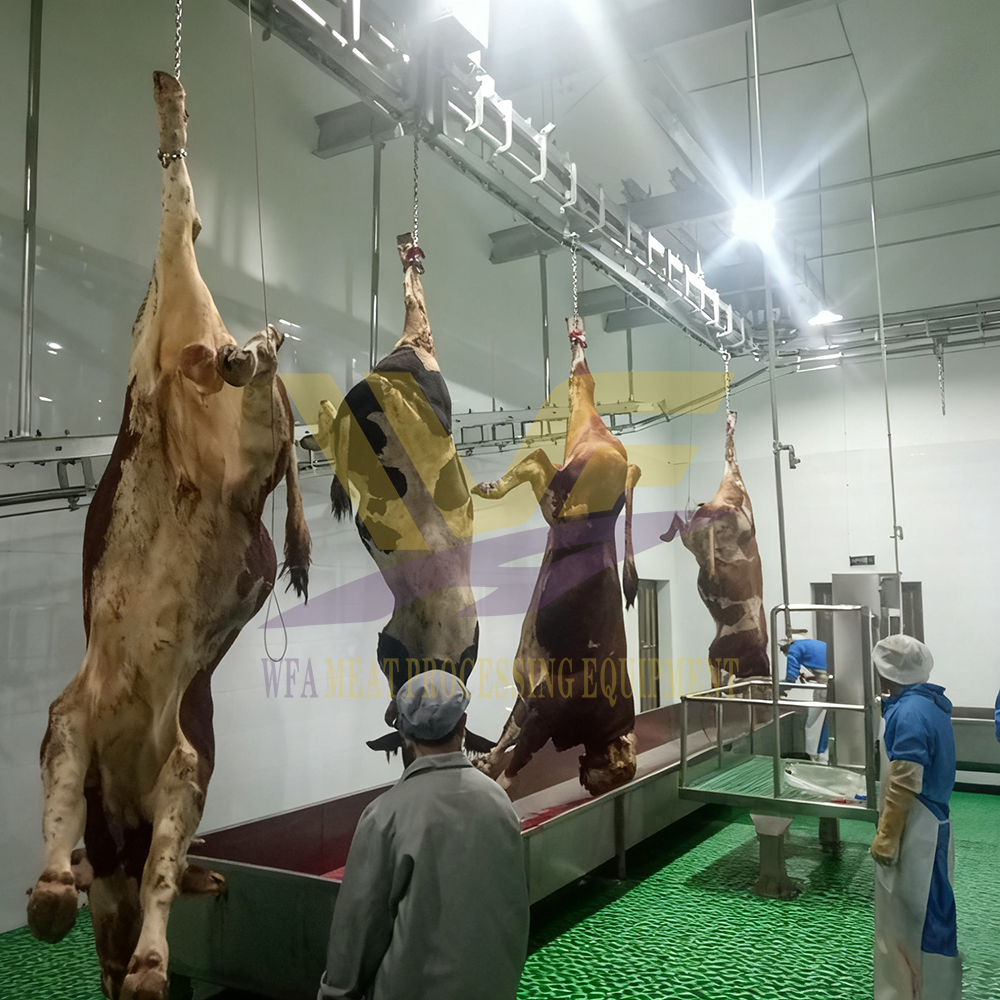
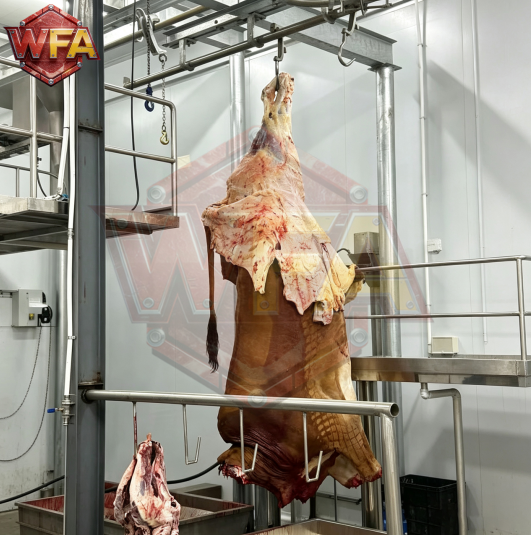
A rail and a knife set are not yet a plant. The package that left the yard carried the generator house, the automatic changeover switchgear, the cold store, the boiler and the effluent treatment set, each sized against the same 300 cattle per shift duty that shaped the rail. Power reaches stunners and compressors without a hand on a lever, steam reaches every wash point, waste water leaves inside the discharge rule the buyer’s municipality enforces, and a carcass reaches the chill room without a break in the chain. That is what a Turnkey Cattle Slaughterhouse Project buys: one supplier, one start up, and a plant that keeps its cold chain through a dark grid.
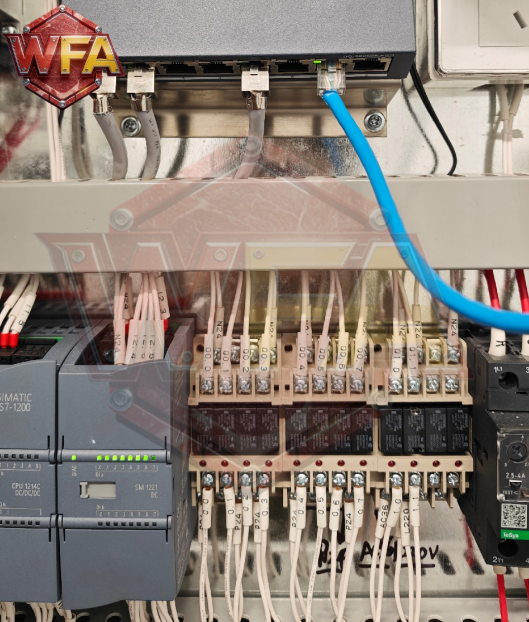
Two generator sets sit in the package for a reason. This Slaughterhouse Project builds redundancy into core power. One carries the chill loop and the rail at full duty, the second waits as a cold standby, and a changeover panel chooses between them and the utility without asking an operator to sprint across the yard. Fuel storage was sized for a run of days, not hours, and exhaust and cooling routes were drawn before the room was poured, so the set does not cook itself on a hot afternoon. Buyers who have lived through a long outage ask about this section first, and they are right to treat this Slaughterhouse Project power layout as non-negotiable.
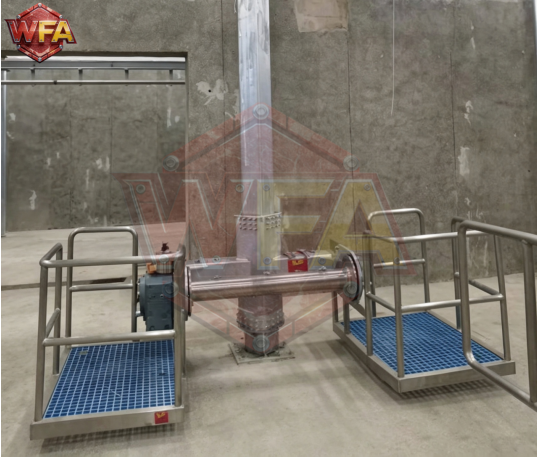
Control panels were built for the voltage, frequency and plug standard the buyer runs at home, 230 volt single phase and 400 volt three phase at 50 hertz, with manuals issued in both working languages before commissioning rather than after. Start up needed no adapter boxes and no improvised wiring on the floor, and the earth leakage scheme was settled with the buyer’s own electrical contractor before the first cable was pulled.
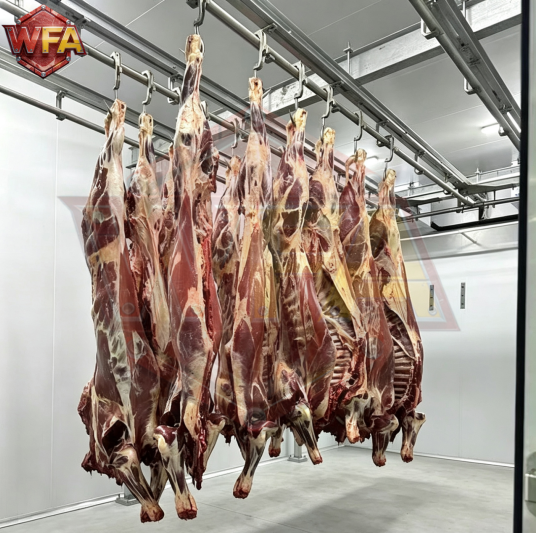
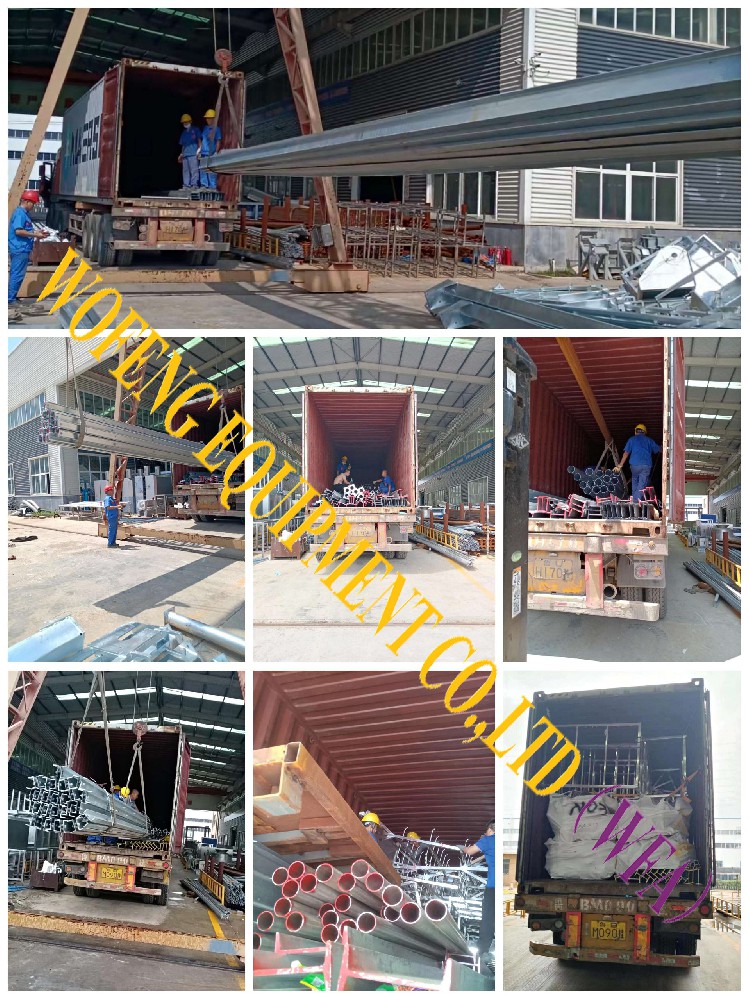
Material certificates, hygienic design statements, as built drawings, spare parts lists and the changeover test record travelled with the shipment, supporting this Slaughterhouse Project from day one, letting the client build the file while steel was still on the water. An auditor asking for traceability on a panel or a pump gets an answer in minutes, not weeks. This level of documentation is a key compliance feature of the Slaughterhouse Project.
In a challenging market, what buyers pay for is engineering discipline—not slogans.