

Innovation & Standard Upgrade: WFA Engineering Completes Full Modernization of Slaughterhouse in Ethiopia, Building a New Benchmark for East African Meat Processing
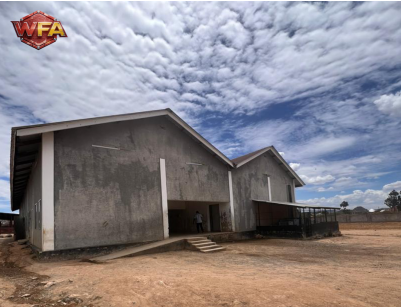
Once restricted by outdated facilities, severely damaged overhead rails and substandard sanitation, a local slaughterhouse in Ethiopia, has achieved a comprehensive industrial transformation. Recently, the full upgrading and renovation project of the slaughterhouse, fully designed, manufactured, installed and commissioned by WFA Engineering, has been successfully completed and officially put into stable operation. The formerly backward old plant, which could only serve the local market, has now evolved into a modern meat processing facility that fully complies with international general standards and EU food hygiene regulations, setting a new benchmark for standardized meat production in East Africa.
This project is far more than a simple equipment replacement. It represents an all-round industrial upgrade centered on safety, efficiency, compliance and sustainability, empowering local livestock processing to integrate with global market standards.
1. Pre-Upgrade Challenges: Outdated Facilities Restrict Industrial Development
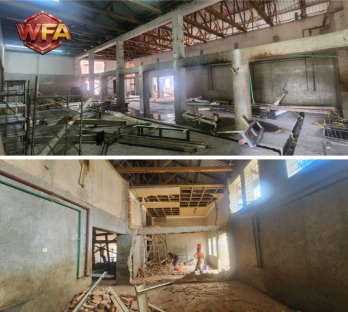
Before the renovation, the slaughterhouse was plagued by inherent structural defects in its core production facilities, which seriously hindered business expansion and industrial upgrading.
Severely damaged overhead rail system with persistent safety hazards
The original carbon steel overhead rails suffered from long-term corrosion and abrasion in the high-humidity and high-corrosion slaughter workshop environment, resulting in deformation, weld rusting, roller jamming and unstable load-bearing. Carcass conveying frequently deviated and stalled, causing high risks of meat contamination. Without food-grade protective treatment, the old rails suffered from lubricant leakage and dirt accumulation in gaps, forming numerous dead corners for sanitation cleaning and disinfection, making it impossible to pass formal export quarantine inspections.
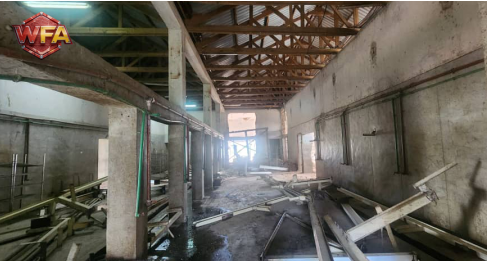
Primitive processing equipment lacking standardized production procedures
The whole workshop relied on simple manual tools and ground trolley transportation, causing mixed flow of personnel and vehicles. There was no physical isolation between clean and polluted areas, leading to frequent cross-contamination risks. The absence of standardized automated stations for skinning, evisceration, washing and pre-cooling resulted in low production efficiency and inconsistent meat quality, failing to meet the strict quality control requirements of cross-border trade.
Incapable of meeting international and EU export compliance standards
The original workshop layout, equipment materials and processing techniques failed to comply with EU food hygiene regulations and humane slaughter standards. The enterprise was limited to small-scale local sales and unable to access high-end overseas export orders, resulting in tremendous waste of local livestock industrial value.
As the local slaughterhouse manager commented: “The aging rails and backward equipment brought persistently high maintenance costs and frequent rectification risks during regulatory inspections. A comprehensive production line upgrade was the only way to expand overseas markets. After extensive comparison, we finally chose WFA Engineering for its rich practical experience and mature project cases in East Africa.”
2. Customized Solution: In-Depth Collaboration & Professional R&D by WFA Engineering Team
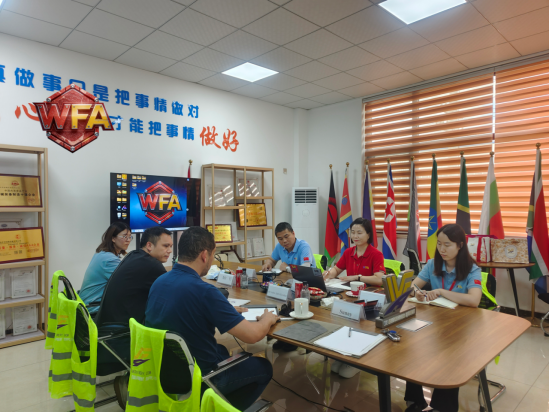
Upon project initiation, WFA Engineering set up a professional special team consisting of structural mechanical engineers, food hygiene designers and overseas on-site construction specialists. The team conducted comprehensive on-site surveys at the factory, and carried out multiple rounds of in-depth communication and scheme demonstration with the client’s management and front-line operators.
Combining the factory’s original building structure, local livestock varieties, tropical humid climate conditions and expected production capacity goals, WFA Engineering optimized and iterated the solution repeatedly to deliver a highly adaptable customized upgrade plan.
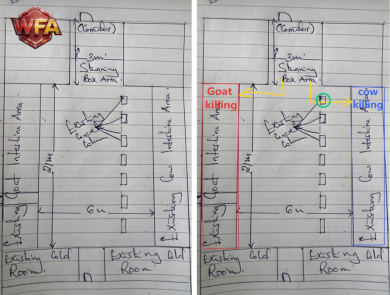
Iterative optimization of multiple construction schemes
Considering the limitations of the old factory’s floor height, load-bearing capacity and workshop flow lines, WFA Engineering designed three sets of rail layout schemes. After comprehensive comparison of construction cycle, transformation cost and later maintenance difficulty, the team finalized the full 304 stainless steel modular overhead rail system as the core upgrading solution. The scheme avoids large-scale building reconstruction and greatly shortens production downtime.
Dual compliance with EU standards and local operational adaptability
The design fully incorporates EU EC1099/853 food hygiene and humane slaughter specifications. All meat-contact components adopt food-grade stainless steel, and the rail transmission system applies a dry lubrication-free structure to completely eliminate oil pollution risks. Meanwhile, WFA Engineering simplified equipment operation logic and provided bilingual operation manuals in English and Swahili, adapting to local workers’ operating habits and reducing long-term maintenance thresholds.
Integrated full-process supporting design
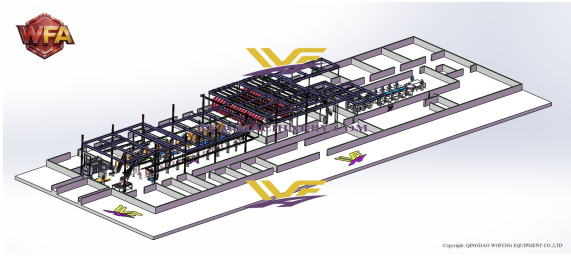
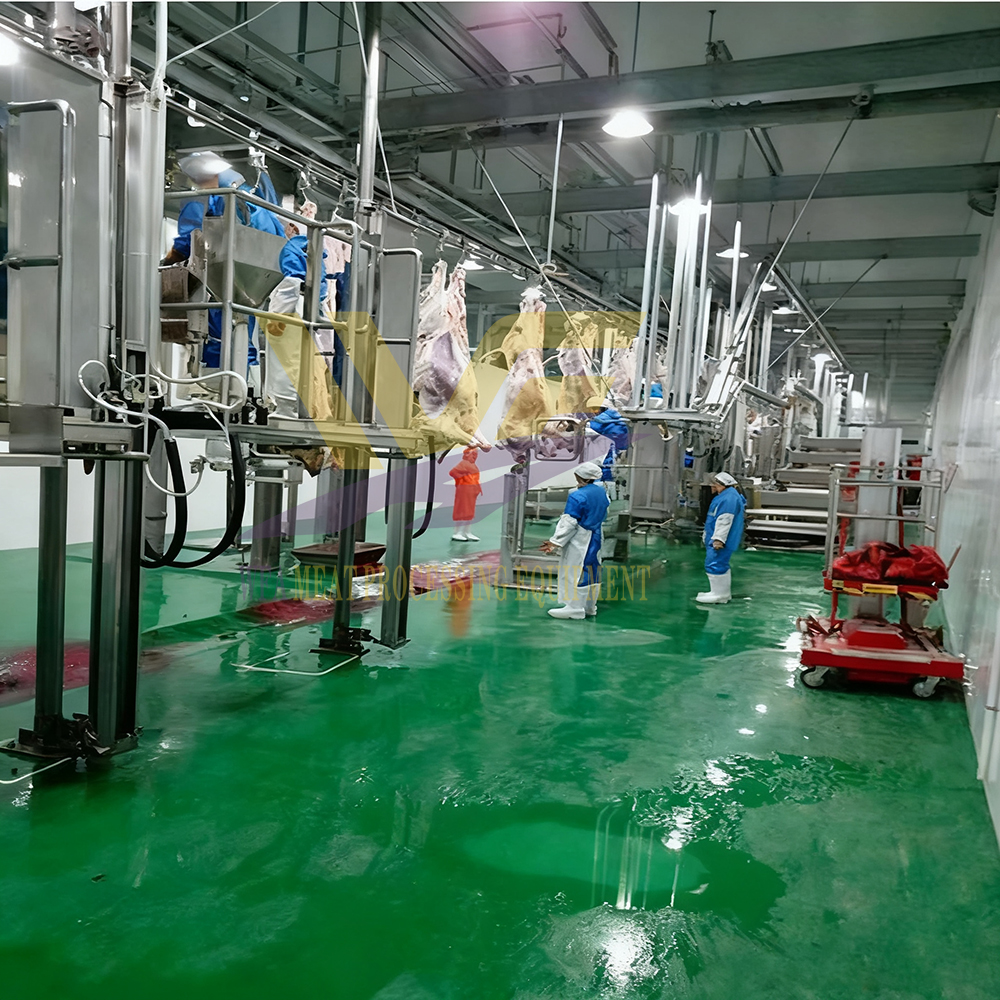
Beyond the overhead rail system renewal, WFA Engineering completed a full set of standardized automated stations for bleeding, skinning, evisceration, carcass cleaning and pre-cooling. The team re-planned four independent flow lines for clean personnel access, livestock feeding, finished product delivery and waste transportation, realizing thorough physical isolation between clean and polluted areas and eliminating sanitation risks from the source.
After multiple rounds of online drawing reviews, on-site adjustments and parameter confirmation, WFA Engineering delivered a complete, practical, compliant and cost-effective renovation solution, which gained full recognition from the client.
3. High-Standard Delivery: From Blueprint to Fully Operational Modern Production Line
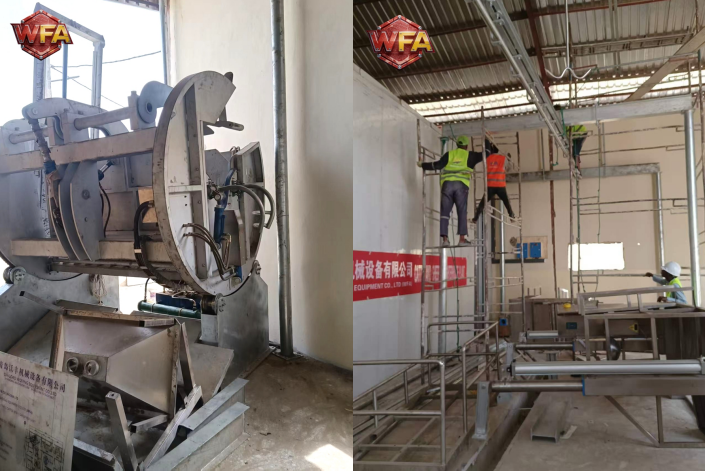
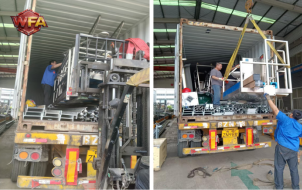
After the finalization of the scheme, WFA Engineering launched standardized customized equipment production domestically and arranged professional overseas construction teams for on-site installation and commissioning, strictly controlling every construction procedure.
Dismantling of old facilities and foundation reinforcement
All rusted and damaged old rails and backward processing equipment were safely dismantled. The top load-bearing structure of the workshop was reinforced and anti-corrosion treated to build a solid foundation for the new stainless steel rail system.
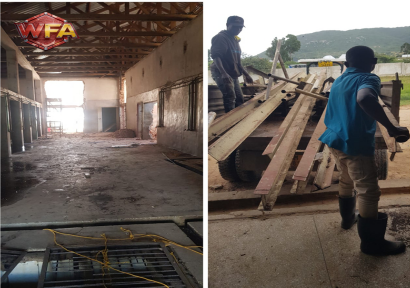
Installation of modern overhead conveying rail system
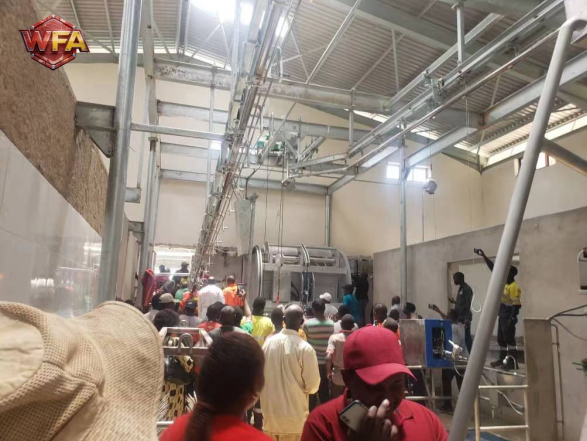
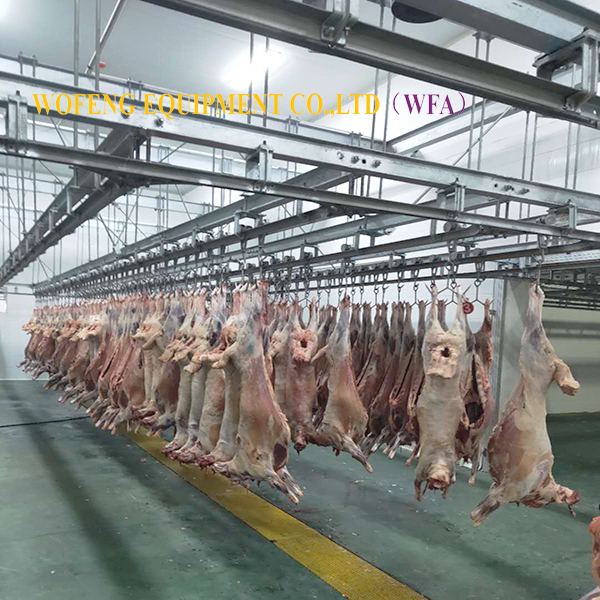
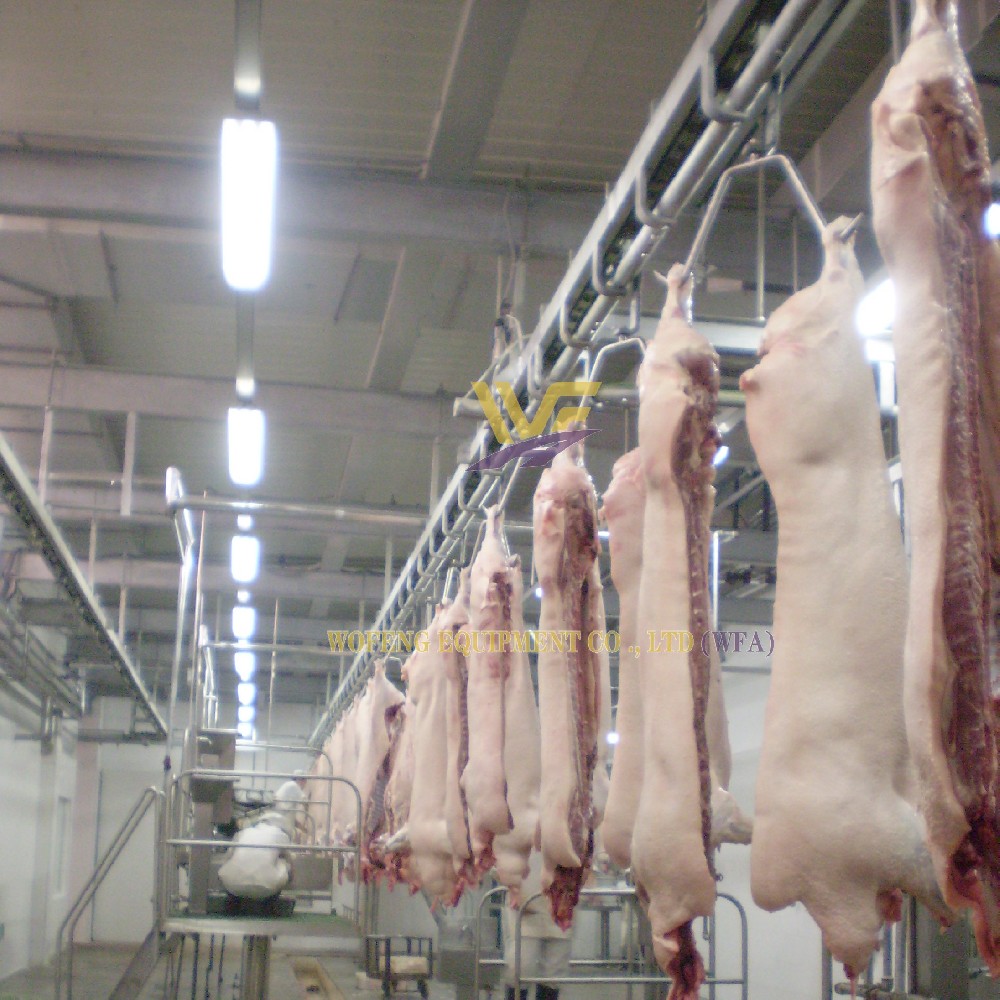
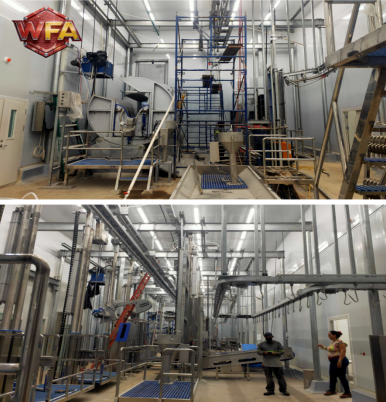
WFA Engineering installed segmented food-grade overhead rails, silent load-bearing pulleys and variable-frequency speed control drive systems. The production line can flexibly adjust operating speed according to slaughter volume, realizing full overhead zero-ground carcass conveying and completely eradicating secondary pollution caused by ground transportation. Reserved cleaning spray interfaces support efficient high-pressure daily disinfection without sanitary dead corners.
Installation and linkage commissioning of standardized slaughter equipment
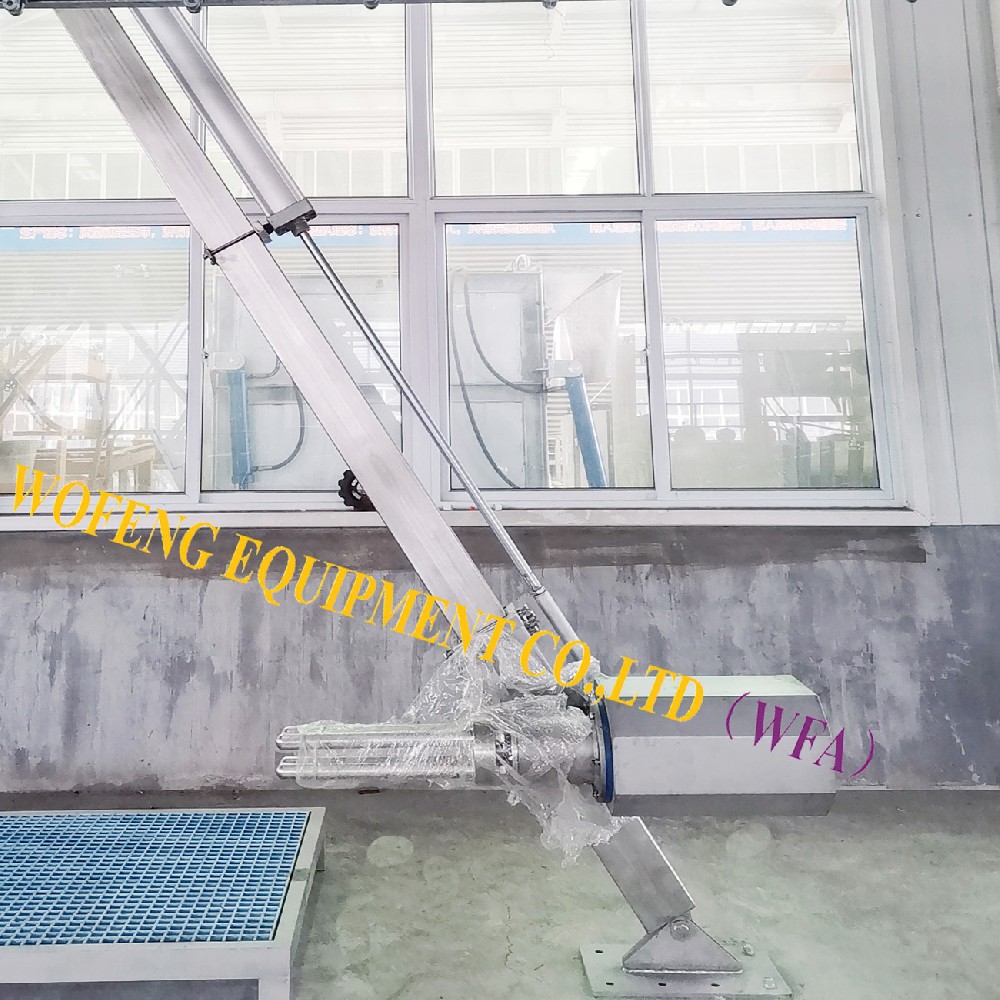
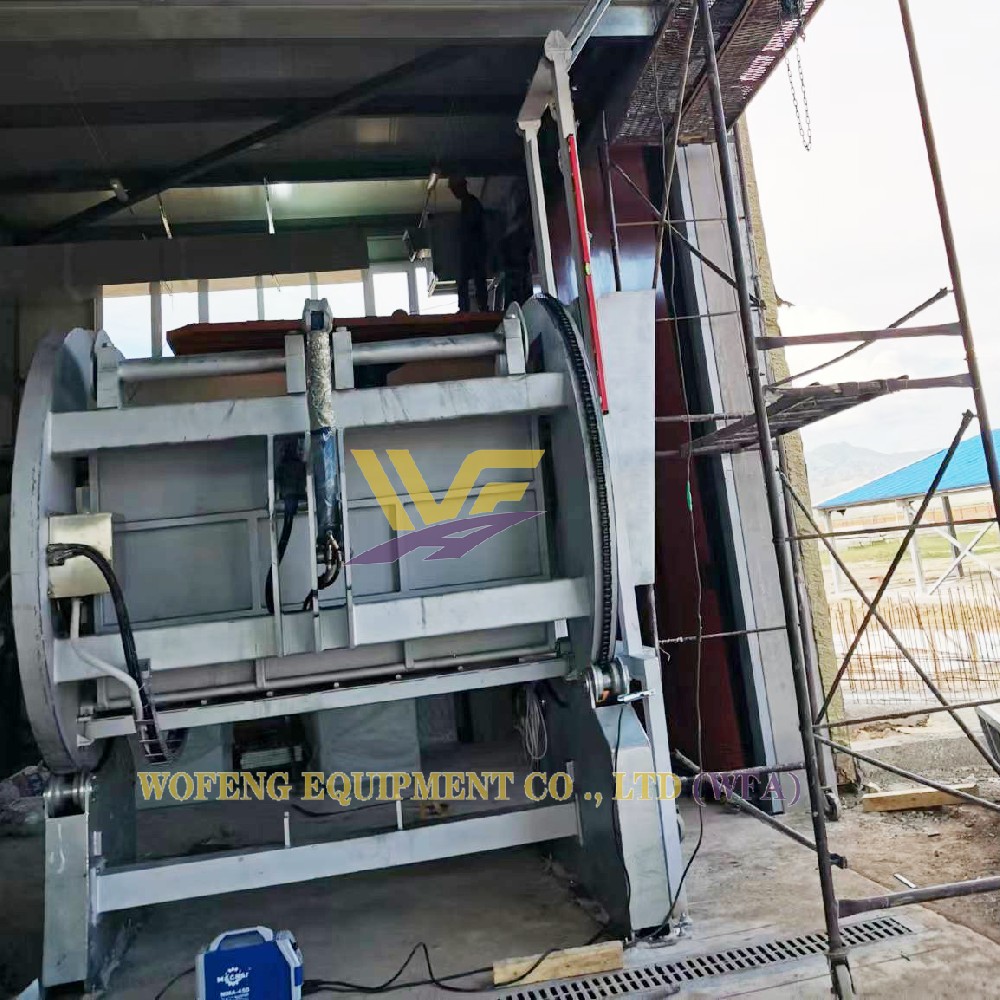
Automated equipment for stunning, lifting, skinning, evisceration, cleaning and inspection was installed in sequence. The seamless connection between rail conveying and each processing station was realized, forming a fully continuous automated production process.
Full-load testing and compliant acceptance
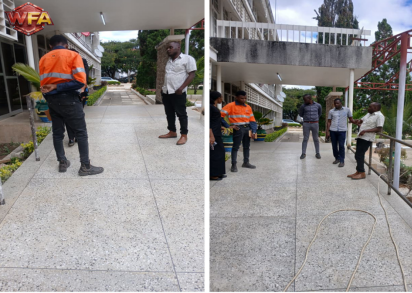
After project completion, WFA Engineering’s engineers conducted 72-hour full-load no-load and material trial operation to comprehensively test rail load-bearing, operational stability and equipment linkage coordination. Systematic training on equipment operation, daily maintenance and fault troubleshooting was provided for local staff. The project passed the joint acceptance by the client and local animal husbandry supervision authorities at one time, with full compliance with international and EU standards.
4. Transformation Achievements: Triple Breakthroughs in Production Capacity, Product Quality and Market Potential
The upgraded slaughterhouse has achieved a qualitative leap in production conditions and operational efficiency, with remarkable comprehensive improvements:
Upgraded sanitary safety of conveying system
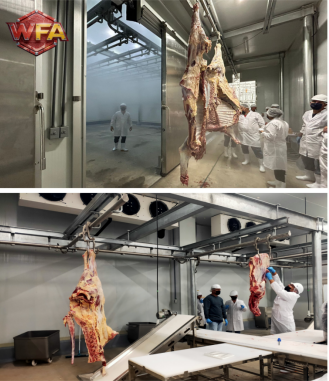
The new stainless steel overhead rail features strong corrosion resistance and easy cleaning with stable operation. Full overhead carcass conveying optimizes workshop space and realizes complete separation of personnel and vehicle flow, thoroughly eliminating cross-contamination risks. The workshop microbial indicators fully meet EU meat processing cleanliness standards.
Greatly improved automation and production capacity
The integrated assembly line reduces 60% of manual handling procedures, with daily slaughter capacity increased by 40% compared with before renovation. It effectively improves meat yield and product stability while reducing processing loss significantly.
Full compliance with international and EU export standards
The entire production line, including equipment materials, processing technology, humane slaughter operation and workshop sanitary layout, fully conforms to EU food regulations. The enterprise now qualifies for high-end meat export orders from East Africa, the Middle East and other global markets, opening up new profit growth channels.
Long-term optimization of operation and maintenance costs
The modular stainless steel rail is wear-resistant and anti-corrosive, reducing equipment failure frequency and annual maintenance costs by 70% compared with traditional carbon steel rails, and extending the service life of production equipment by more than double.
The client’s project director spoke highly of the cooperation: “WFA Engineering solved our practical problems with targeted customized solutions instead of rigid universal templates. The upgraded modern production line is clean, efficient and fully compliant with global standards, providing us with a powerful passport to enter the international market. This upgrade is a crucial milestone for our enterprise development.”
5. Future Outlook: Empowering the Modernization of Africa’s Livestock Industry
The successful upgrading of the slaughterhouse marks another important milestone for WFA Engineering in empowering the modernization of Africa’s livestock processing industry.
Focusing on the upgrading of African cattle and sheep slaughtering industry, WFA Engineering provides one-stop overall renovation solutions including on-site survey, customized solution design, equipment manufacturing, overseas installation, commissioning training and after-sales maintenance. Targeting the common pain points of aging rails, backward equipment and substandard compliance of old slaughterhouses across Africa, WFA Engineering delivers high-adaptability and cost-effective standardized upgrading services.
With mature EU-standard production line design capability, corrosion-resistant processing technology adapted to Africa’s humid and hot climate, and a professional local overseas service team, WFA Engineering has long supported the standardized transformation of slaughter enterprises in Tanzania, Kenya, Uganda, Nigeria and other East and West African countries. The company continuously promotes the standardized and international development of Africa’s local meat processing industry, helping African livestock products access global markets.
In the future, WFA Engineering will further optimize slaughter equipment compliant with international and EU dual standards, improve the regional after-sales service network in Africa, and provide more high-quality, compliant and modern full-chain upgrading solutions for global meat processing enterprises.
From breaking old limitations to reshaping industry standards, WFA Engineering keeps empowering the modernization of the global livestock processing industry and writing a new chapter for Africa’s meat manufacturing upgrade